Sunrise Is the New Last Call: Inside the 5AM Movement Rewriting City Status
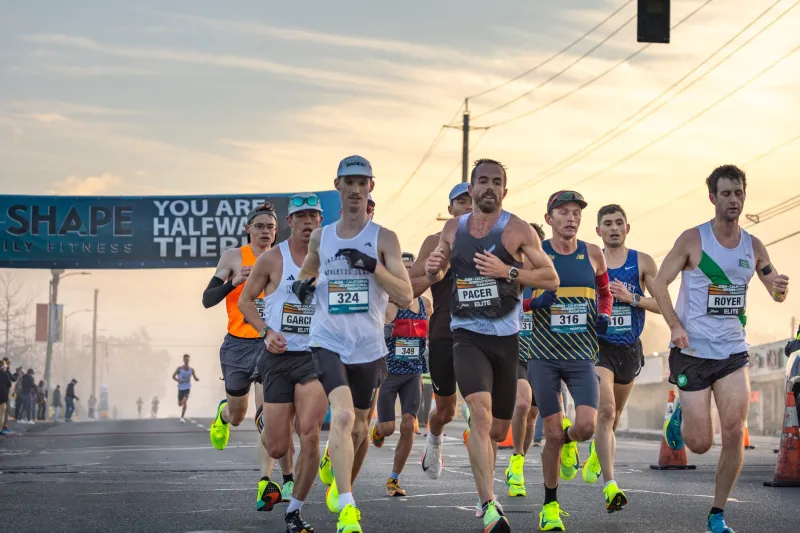
Somewhere in Brooklyn right now, a hundred people in matching running singlets are gathering under a streetlight that hasn't fully given up yet. It's 5:47 AM. Nobody's hungover. Nobody's performing for a camera. And weirdly, everybody's having the time of their lives.
Welcome to the sunrise economy — the quiet counterculture that's making the city's old midnight rituals look, well, kind of exhausting.
The Great Sleep Schedule Flip
For decades, urban status was measured in how late you could stay out. The VIP table, the afterparty, the story you'd tell (or worse, couldn't remember) the next day. But a new generation of young professionals is flipping the script entirely. Their proof of a life well-lived isn't a 2AM selfie — it's a 6AM Strava split, a dip in a 40-degree plunge tub, and an oat milk cortado before most of the city's even hit snooze.
Run clubs like Midnight Runners NYC, November Project's free dawn workouts in Boston, and the exploding network of Sunday-morning run-and-rave collectives in Austin, Chicago, and LA have turned exercise into the new social scene. And unlike the velvet-rope era, the door policy here is simple: show up.
Why the 5AM Crew Is Winning
There's a practical logic underneath the trend. City rents demand city salaries, city salaries demand side hustles, and side hustles demand hours. When your calendar is stacked, the only unclaimed territory left is the morning. So the ambitious claimed it.
But it's not just logistics — it's psychology. There's a genuine high to finishing a 5K while the skyline turns pink. There's community in suffering through a cold plunge together that a loud lounge can't replicate. And there's a subtle status shift happening: being seen at sunrise signals discipline, not just disposable income.
The morning scene is also radically accessible. No table minimums. No guest lists. No $22 cocktails. Whether you're a junior analyst or a startup founder, the 6AM coffee meetup at your neighborhood café is one of the last genuinely democratic rooms in the city.
The New Third Places
Sociologists talk about "third places" — the spots that aren't home or work where community happens. For decades that was the bar. Increasingly, it's the run club, the bouldering gym at 6:30 AM, the farmers market crew, the cold-plunge pop-up in a shipping container off the rail line.
Coffee shops have noticed. Cafés in Seattle, Denver, and Philadelphia now open early specifically to capture the post-run crowd, complete with loyalty programs and community boards that function like small-town social networks. Some bakeries time their first batch of croissants to the exact minute the run clubs finish their loops. That's not an accident — that's an economy.
Is Nightlife Dead? Not Exactly
Before we write a eulogy for the city at night, let's be clear: the bars aren't empty. But the balance is shifting. The same person who's at a rooftop lounge on Friday might be at a sunrise yoga session on Saturday — and increasingly, the sunrise version is the one they post about.
There's also something deeper at work. A generation raised on burnout culture and doom-scrolling is actively choosing rituals that give back instead of take. Momentum compounds. A good morning becomes a good week becomes a good year. The 2AM bottle service, by contrast, mostly compounds into a headache and a lighter wallet.
How to Join the Movement
You don't need gear, membership, or connections. Start with one early morning a week — a walk, a run, a coffee with a friend while the city's still quiet. Search your neighborhood for run clubs; most are free and aggressively welcoming to beginners. If you're feeling brave, find a cold plunge community. If you're feeling smart, just find the café where the 5AM crew lands afterward.
The city used to belong to whoever could stay out latest. Now it belongs to whoever gets up first. Dream bigger — just set two alarms.