Your Living Room Is a Billboard: How City Dwellers Are Cashing In on Aesthetic Real Estate
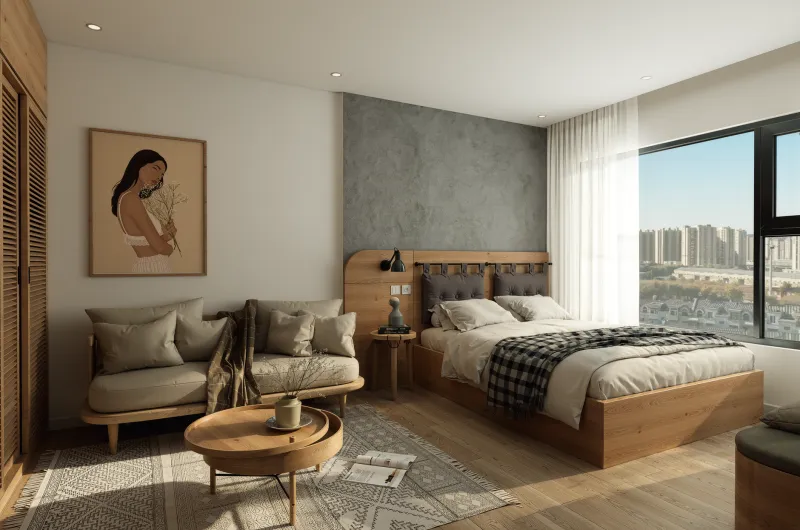
For most people, decorating an apartment is about making a space feel like home. For a growing number of ambitious city dwellers, it's about making a space feel like a brand.
Scroll through Instagram Stories on any given weekday morning and you'll catch it — the carefully angled coffee setup, the gallery wall that somehow looks effortless, the plant shelf that's doing way too much in the best possible way. These aren't just aesthetic choices. They're calculated moves in a game where your zip code and your design sense can combine into serious earning potential.
Welcome to the apartment tour hustle. It's real, it's growing, and if you're still treating your living space like a private sanctuary, you might be leaving money on the table.
The Psychology Behind 'Place-Flexing'
There's a reason certain apartment content stops your scroll cold. Psychologists call it environmental signaling — the idea that the spaces we inhabit communicate our values, our taste, and our social standing before we ever say a word. On social media, that signal gets amplified to thousands, sometimes millions, of people simultaneously.
When someone posts a well-lit corner of their Brooklyn studio or a sun-drenched living room in a Chicago high-rise, they're not just showing off square footage. They're broadcasting a worldview. The vintage mid-century lamp says something different than the neon sign. The open cookbook on the kitchen island tells a different story than the takeout containers. Every object in frame is a data point, and your audience is reading every single one.
This is what marketers used to pay agencies millions to manufacture. Now, regular people are doing it organically — and brands have noticed.
From Content to Currency
The pipeline from aesthetic apartment content to actual income isn't as long as you'd think. It typically moves through a few distinct phases.
First comes the following. Consistent, high-quality apartment content — especially content that captures a specific city's energy — tends to build loyal, engaged audiences fast. People aren't just following a person; they're following a vibe, a lifestyle they want to understand or replicate.
Then come the DMs. Interior brands, furniture companies, home goods startups, and even real estate developers start reaching out. What began as a personal aesthetic project starts looking a lot like a media property.
Take Marcus, a 28-year-old graphic designer in Atlanta who started posting apartment transformation content during a slow freelance stretch. Within eight months, he had 40,000 followers and three paid brand partnerships with furniture and lighting companies. He now earns more from his apartment content than he does from client work — and he's used the platform to launch a side consulting service helping other young renters redesign their spaces on tight budgets.
Or consider Priya, a 26-year-old in Los Angeles who turned her 650-square-foot West Hollywood apartment into what she calls a "living mood board." Her hyper-specific aesthetic — maximalist color, global textiles, thrifted vintage pieces — attracted a design-curious audience that eventually led to a paid collaboration with a major home décor brand and a consulting retainer with a boutique hotel looking to redesign its rooms.
Neither of them set out to become influencers. They set out to build something beautiful — and the business followed.
Design Choices as Status Signals
Here's what separates the apartment accounts that blow up from the ones that flatline: specificity. Generic "clean aesthetic" content is everywhere. What cuts through is a point of view so distinct it feels like a personality.
The most successful apartment content creators in cities like New York, LA, Chicago, and Miami aren't just showing nice furniture. They're curating a specific tension — between old and new, between budget and luxury, between gritty city energy and polished design sensibility. That tension is what makes the content feel alive.
Design choices also signal taste-making authority, which is the real currency here. When your audience starts asking where did you get that or how did you style that corner, you've crossed from content creator to trusted voice. That's when the consulting inquiries start. That's when the brand partnerships get more serious. That's when people start paying you to help them think.
In cities especially, where everyone is competing for a sense of identity in dense, often anonymous environments, the ability to carve out a distinctive aesthetic space — even in 500 square feet — carries enormous social weight.
Building the Revenue Stack
The smartest people playing this game aren't relying on a single income stream. They're building what you might call a revenue stack — multiple ways to monetize the same core asset.
At the base level, there are sponsored posts and gifted partnerships. Brands send products, you integrate them naturally into your space content, you post. Simple, but it adds up fast when you're working with multiple partners.
Above that sits consulting. Once you've established design authority with an engaged audience, people will pay for your eye. This can be hourly virtual consultations, full room redesigns, or even brand advisory work for companies trying to understand how young urban consumers actually live.
Then there's the digital product layer — mood board templates, room planning guides, curated shopping lists. Low effort to create, high margin to sell, and they keep generating income long after you post them.
At the top of the stack, some creators have leveraged their apartment platform into larger brand deals, real estate partnerships, or even their own product lines. The apartment was the proof of concept. The business was always the destination.
Making It Work in the Real World
None of this requires a penthouse or a decorator's budget. In fact, some of the most compelling apartment content comes from people working with genuinely modest spaces. The constraint forces creativity, and creativity is what audiences respond to.
A few things that consistently separate the accounts that convert into income from the ones that don't:
Consistency over perfection. Posting regularly — even imperfectly — builds more trust than sporadic, polished content.
City-specific storytelling. Lean into your actual location. The light in your Denver apartment is different from the light in a Houston loft. That specificity is an asset, not a limitation.
Engagement over reach. A 15,000-follower account with deeply engaged, design-obsessed followers is worth more to most home brands than a 200,000-follower account where nobody's paying attention.
The behind-the-scenes angle. Process content — the before-and-after, the styling decisions, the mistakes — consistently outperforms finished product shots. People don't just want to see the beautiful space. They want to understand how you built it.
The Bigger Picture
What's really happening here is a fundamental shift in how young city professionals think about their living spaces. An apartment used to be a cost center — rent, utilities, furniture, done. Now, for a growing number of people, it's an investment in a platform.
The city has always rewarded people who understand that presentation is power. The way you dress, the places you go, the rooms you occupy — these things have always communicated something. The apartment tour hustle is just the digital evolution of that logic, applied to the most intimate space you occupy.
Your walls have always been talking. The question is whether you're making sure they're saying something worth listening to — and whether you're getting paid when they do.