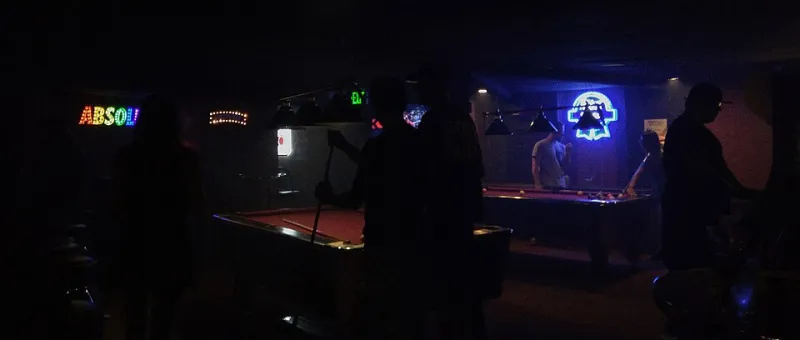
After Midnight, the Real Deals Get Made
Photo: Wilfredor, CC BY-SA 4.0, via Wikimedia Commons
Forget the pitch deck. Forget the calendar invite, the conference room, the catered lunch with the awkward small talk. If you want to know where the real moves get made — the ones that actually change careers, launch movements, and build something that lasts — you need to follow the city deeper into the night.
Somewhere around 2 AM, something shifts. The professional armor comes off. The careful language loosens. People stop performing and start talking. And in that window — tired, a little buzzed, laughing too loud at a corner table — ideas that would never survive a morning meeting get their first breath of life.
The Hour When the Filters Drop
There's actual psychology behind this. Decision fatigue is real — by the time the night gets deep, the brain has spent its energy on maintenance and performance. What's left is something more raw, more honest, more willing to say the wild thing out loud.
For ambitious people in creative industries, that's not a liability. That's a launching pad.
"I've signed artists at 11 AM in an office," says Dara Okafor, an independent music manager based in Atlanta who's worked with emerging R&B acts across the Southeast. "But the ideas — the ones that actually stuck, the concepts that shaped a whole album rollout or a brand pivot — those almost always came out of a late-night conversation. Something about that hour makes people brave enough to say the thing they've been sitting on."
She's not alone in that observation. Across cities, across industries, the pattern repeats: the late night is where ambition gets unfiltered.
A Studio Session That Became a Movement
Ask anyone in Chicago's independent music scene about the summer of 2021, and you'll hear some version of the same story. A group of producers, vocalists, and visual artists started gathering after midnight at a rented rehearsal space in Pilsen — not to work on anything specific, just to be in the same room.
Those sessions, loose and low-stakes, eventually produced a collaborative project that racked up millions of streams without a label, a publicist, or a marketing budget. The artists involved now run a collective that's released four projects, thrown two sold-out shows, and built a brand that extends into merchandise and visual art.
None of it was planned. It was born from the specific alchemy of late-night proximity — people who respected each other's work, no agenda, good speakers, and enough hours in the dark to let something real develop.
"We weren't trying to build anything," says one of the collective's founding members, who goes by the producer name Lune. "We were just vibing. And then one night somebody played something and everybody lost their minds and we all just looked at each other like — okay, this is what we're supposed to be doing."
The Business Pivot Born at Last Call
It's not just the music world where the after-midnight magic operates. In cities like Austin, Denver, and Brooklyn — where startup culture and creative culture have been bumping into each other for years — some of the most interesting business pivots have roots in a late-night conversation between people who were supposed to call it a night an hour earlier.
Take the story of a now-thriving event production company in Brooklyn that started as a text thread after two friends, both burned out from corporate jobs, ended up at a Bushwick warehouse party on a random Thursday and spent the ride home at 3 AM talking about how they could do it better. That conversation became a weekend project. The weekend project became a side hustle. The side hustle became their full-time business within 18 months.
"We were running on no sleep and too much adrenaline and we just started talking about what we'd actually do if we were running that event," remembers one of the co-founders, who asked to stay anonymous for business reasons. "By the time we got to my apartment, we had the whole thing mapped out on my phone's notes app. That notes file is literally the founding document of our company."
Why Cities Are the Perfect Incubator for This
This phenomenon isn't random. Cities create the conditions for it in ways that suburbs and small towns simply can't replicate.
The density matters. The fact that a music producer, a brand strategist, a filmmaker, and a fashion designer can all end up at the same bar on a Wednesday night without any of them planning to meet — that's a city-specific miracle. The overlap of industries, ambitions, and creative energies in a tight geographic space means that late-night conversations are almost always cross-pollinating in ways that generate unexpected ideas.
The nightlife infrastructure matters, too. The dive bar with the good jukebox that stays open until 4. The diner where everybody ends up after the show. The studio apartment where the after-party always seems to land. These aren't just places to hang out — they're, functionally, incubators. They're where the city's creative class does some of its most important work, dressed like it's just having fun.
The Unwritten Rules of the Late-Night Conversation
If you're trying to manufacture this energy, you're already missing the point. The late-night conversation that builds something real has a few defining qualities that you can't fake:
It starts from genuine connection. Nobody's pitching. Nobody's networking in the gross, transactional sense. People are actually interested in each other — in the work, in the story, in the vision.
The stakes feel low, so the ideas go high. When nobody's evaluating you, you'll say the thing you've been afraid to say in a room full of people who might judge it. That's where the good stuff lives.
There's follow-through in the morning. The conversation is the spark, but the ones who turn those late-night sparks into actual movements are the ones who wake up and do something about it before the magic fades.
Dara Okafor has a rule she lives by: if a late-night idea still sounds good at 10 AM the next morning, it's real. "That's my filter," she says. "Because some things only make sense at 2 AM. But the ones that survive the morning? Those are the ones you build."
Stay a Little Later
The city rewards the ones who stay in it — who don't rush home, who follow the night where it leads, who end up in rooms they didn't plan to be in talking to people they didn't expect to meet.
Some of the most consequential decisions in music, business, and culture were made in exactly those moments. Not in boardrooms. Not on Zoom. But in the honest, electric, unguarded hours when the city finally exhales and the real dreamers get to work.
Next time you're about to head out early, consider staying just a little longer. The conversation that changes everything might be one round away.