Show Up or Get Left Behind: The Hidden Economy of Being Seen
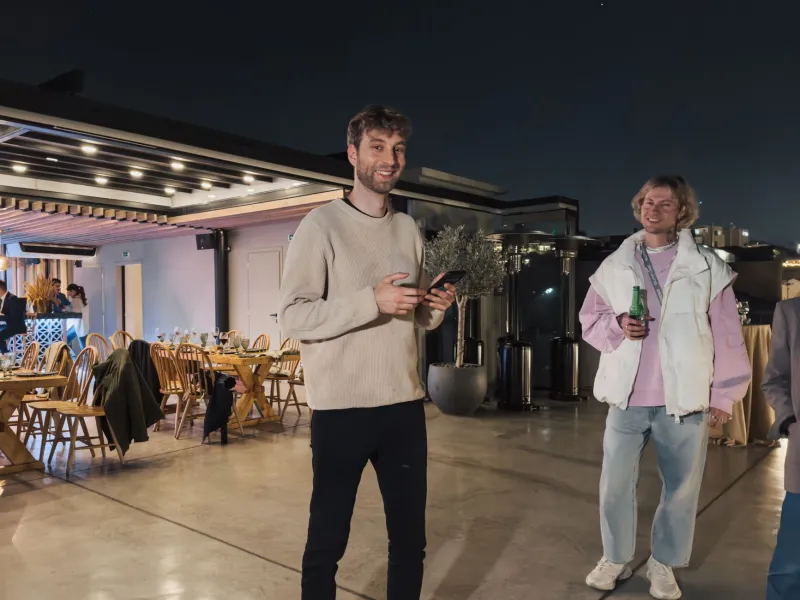
There's a moment that every city climber eventually recognizes. You're at a rooftop event, a gallery opening, or a low-key listening party, and you watch someone walk in — not famous, not particularly loud — and within twenty minutes, three people have pulled them aside for conversations that clearly matter. You don't know their job title. You barely know their name. But somehow, they own the room.
That's not luck. That's the visibility economy at work.
Presence Is the New Portfolio
We've spent years being told that skills, credentials, and hustle are the only things that move the needle. And sure, those things matter. But in a city where every block is teeming with talented, ambitious people, the differentiator isn't always what you can do — it's whether the right people have seen you do it, or even just seen you.
Strategic visibility is the idea that your physical presence in high-leverage spaces creates compounding social proof. Every time you show up at the right event, sit at the right table, or get photographed at the right venue, you're depositing into an account that pays out in opportunities, introductions, and influence.
Marcus Webb, a 29-year-old brand consultant based in Atlanta, didn't land his first major client through cold outreach or a polished pitch deck. He landed it because he'd been showing up at the same creative industry happy hours for eight months straight. "I wasn't pitching anyone," he says. "I was just there. Consistently. And eventually, the right person started wondering who I was."
That curiosity turned into a conversation. That conversation turned into a contract worth more than he'd made in the previous year combined.
The Architecture of the Right Room
Not all visibility is created equal. Showing up everywhere is just noise. The real play is about selectivity — understanding which spaces carry social weight in your specific lane and then becoming a fixture in them.
Think of it like real estate. Certain neighborhoods — certain rooms — carry inherent prestige. Being a regular at a venue where industry tastemakers, investors, or creative directors congregate puts you in proximity to decisions being made in real time. You're not just networking. You're becoming part of the ambient culture of that space.
Jasmine Torres, a 31-year-old music publicist in New York, mapped this out deliberately when she relocated from Miami. "I spent my first three months in the city doing research," she explains. "I identified the five events that the people I wanted to work with actually attended. Not the big, flashy ones — those are tourist traps. The smaller, more intentional ones where the real conversations happen."
She didn't try to force connections. She just kept appearing. Nodding hellos turned into real names. Real names turned into DMs. DMs turned into collaborations with two of the most respected independent labels operating out of Brooklyn right now.
Social Proof Has a Physical Address
Here's the thing nobody talks about enough: social proof isn't just digital. Yes, a well-placed tag or a viral moment can amplify your presence. But in city culture, physical social proof — being seen in the flesh, in context — carries a different kind of weight.
When you're spotted at the right spots repeatedly, people start to assign you a narrative. You become someone who moves in certain circles. Someone who belongs. And belonging, in a city full of strivers all trying to prove themselves, is enormously powerful.
Derek Okafor, a Chicago-based entrepreneur who built a six-figure streetwear brand, credits a significant chunk of his early traction to one simple habit: he went to every relevant industry event he could find for two years straight, always dressed intentionally, always with a card (or more often, an Instagram handle) ready. "People started tagging me in photos from events I attended," he says. "My follower count grew, but more importantly, my perceived status grew. Brands started reaching out because they thought I was already somebody."
The perception preceded the reality — and then helped create it.
Intentional Positioning vs. Just Being Thirsty
There's a fine line between strategic presence and desperate visibility-chasing, and city culture has a sharp nose for the difference. The people who win at this game aren't the ones working the room with a stack of business cards and a sales pitch stapled to every handshake. They're the ones who show up with genuine curiosity, stay engaged in the conversation actually happening around them, and let their consistency do the heavy lifting.
The goal isn't to be seen trying to be seen. It's to become genuinely embedded in spaces where the right things happen — and then let proximity do its work.
That means doing your homework. It means understanding the culture of a room before you walk into it. It means being a real participant, not just an observer with an agenda.
The Compounding Return of Showing Up
What makes the visibility economy so powerful — and so underestimated — is how it compounds. One connection leads to an introduction. That introduction lands you on a guest list. That guest list puts you in a room where a partnership forms. That partnership gets you a speaking slot. That speaking slot gets you seen by someone who changes everything.
None of it happens if you stay home.
The city is always running. Deals are being made at dinner tables, at after-parties, in the smoking sections outside venues that look unremarkable from the outside. The people building real momentum aren't waiting for opportunity to find them through a LinkedIn message. They're out there, in the rooms, at the events, in the flow of city life — because they understand that in an economy built on relationships and reputation, presence isn't just valuable.
It's everything.