Your Sunday Is Showing: How Weekend Rituals Are Building Your Reputation Before You Ever Open Your Mouth
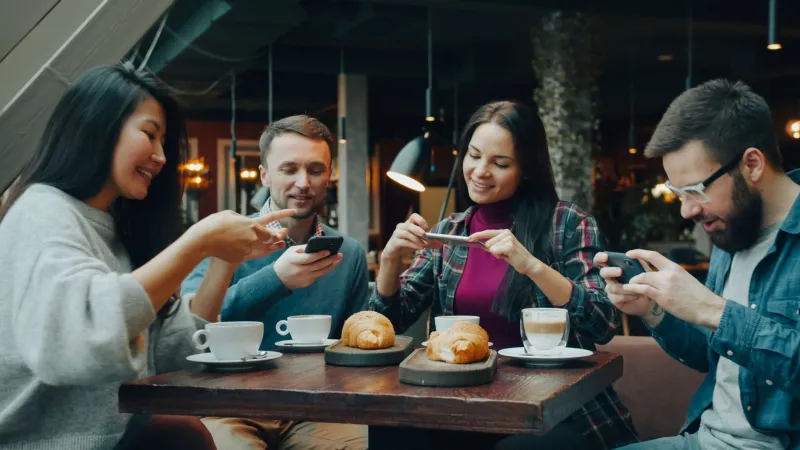
Somewhere between your third cortado and the moment you spot someone you vaguely know from that panel event three months ago, it hits you: you've been coming to this place every weekend for two years. The barista knows your order. The guy at the corner table is starting to feel like a neighbor even though you've never exchanged more than a nod. And the woman who just walked in — the one who runs that creative agency you've been low-key following on Instagram — is scanning the room and landing on your face with a look of recognition.
This is not an accident. This is the Sunday ritual economy doing exactly what it's supposed to do.
In a big city, where anonymity is the default and relationships take real effort to build, consistency is a superpower. Where you show up, how often you show up, and the crowd you show up around all function as a kind of ambient personal branding that operates in the background of your life whether you're paying attention to it or not. The question isn't whether your weekend routine is broadcasting a signal. It's whether you're in control of what that signal says.
The Psychology of Recurring Presence
Human beings are wired to trust familiarity. Psychologists call it the mere exposure effect — the tendency to develop positive feelings toward things and people simply through repeated contact. In the context of city social life, this means that showing up at the same spot regularly, at roughly the same time, creates a slow accumulation of social credibility that you'd never be able to manufacture through a single impressive introduction.
The person who sees you at the farmers market every Saturday morning, then again at the gym on Sunday afternoons, then notices you at the neighborhood coffee spot on weekday mornings — that person has unconsciously filed you under reliable, present, part of this world. And in a city full of people who blow through spaces like weather patterns, that kind of consistent presence is genuinely rare. It makes you memorable in a way that a business card never could.
This is the foundation of the Sunday ritual economy: not hustle, not performance, just the compound interest of showing up in the same rooms on a regular schedule.
Where You Go Is Who You Are
Let's talk about venue selection, because not all recurring spots are created equal when it comes to social positioning. The gym you choose, the brunch spot you rotate through, the park where you run, the coffee shop where you work on weekends — each of these is a micro-community with its own social texture, and the people you're likely to encounter in each one vary dramatically.
If you're in the music industry, or want to be, your weekend spots should be in neighborhoods where that world lives and breathes. In New York that might look like a Sunday morning at a Bed-Stuy coffee shop or an afternoon session at a record shop in the East Village. In LA it might mean the right gym in Silver Lake or a weekly farmers market in Los Feliz. In Atlanta, Chicago, or Houston, you probably already know which zip codes carry the cultural weight — the question is whether you're physically present in them on a consistent basis.
This isn't about being fake or calculating. It's about being intentional. You're going to have a weekend routine regardless. You might as well design it around environments that reflect who you are and who you want to become.
Brunch as a Business Meeting You're Not Billing For
Brunch culture gets a lot of mockery, but strip away the mimosa jokes and what you're actually looking at is one of the most efficient recurring networking formats in American city life. A two-hour weekend meal with a rotating cast of friends, acquaintances, and plus-ones is a remarkably high-bandwidth social environment. Conversations go longer, guards come down, and the relaxed weekend energy creates space for the kind of candid exchanges that almost never happen at a formal networking event.
The most strategically minded young professionals in cities like DC, Chicago, and New York have figured this out and turned their recurring brunch tables into something close to a weekly board meeting. They're deliberate about who they invite, they rotate in new faces alongside familiar ones, and they use the format to make introductions that would feel transactional in a professional context but feel completely natural over eggs and coffee.
You don't need a big squad or a fancy reservation to make this work. A consistent table of four to six people, meeting at the same spot every other Sunday, will generate more genuine relationship capital over the course of a year than most people build in five years of sporadic networking events.
The Gym Flex Nobody Talks About
Fitness culture in major American cities has become one of the most powerful social sorting mechanisms of the last decade. Boutique fitness studios — the cycling classes, the boxing gyms, the yoga studios with the waitlists — aren't just places to work out. They're communities with their own internal social hierarchies, recurring faces, and surprisingly dense professional networks.
The regulars at your Tuesday morning spin class know each other in a specific, intimate way that comes from suffering through the same forty-five minutes of cardio on a weekly basis. That shared experience creates a kind of social bond that accelerates trust in a way that few other recurring activities can match. And because these spaces tend to attract ambitious, health-conscious young professionals, the overlap with your professional world is often higher than you'd expect.
This doesn't mean going to the gym to network. It means choosing your fitness community intentionally and then just being a genuine, consistent member of it. The professional benefits are a byproduct of the social bonds, not the goal.
Designing the Rhythm That Works for You
The key to making your weekend ritual economy actually function is consistency over time. One incredible Saturday means nothing. Fifty ordinary Saturdays in the same ecosystem means everything.
Start by auditing your current weekend patterns. Where are you already going? Who are you already seeing? Are those environments aligned with the version of yourself you're trying to build? If the answer is no, you don't need to blow up your whole routine — you just need to make a few intentional substitutions and additions.
Pick two or three recurring spots and commit to them for at least three months. Let the familiarity build. Learn people's names. Be warm and genuinely curious when you run into the same faces. Over time, you'll start to feel the social fabric of those spaces knit itself around you — and the city, which can feel enormous and indifferent, will start to feel like a neighborhood.
Your Sunday is already showing. Make sure it's saying something worth hearing.