Sky-High and Secret: How Rooftop Lounges Became the New Heartbeat of City Nightlife
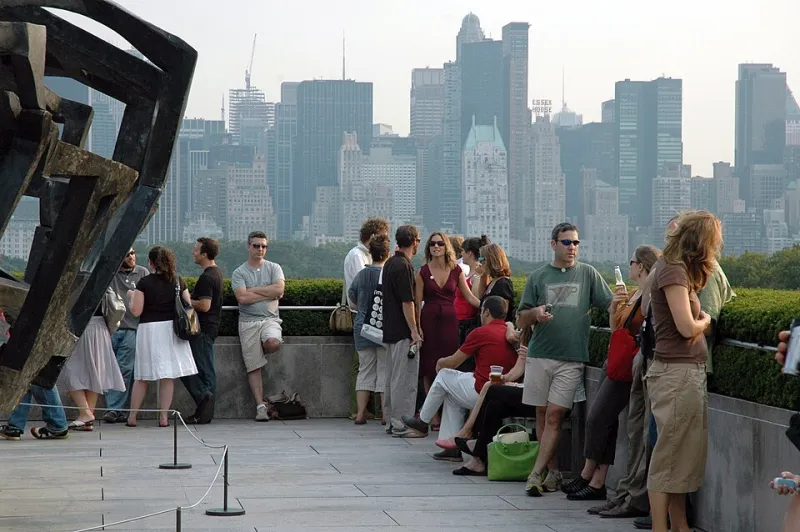
Photo: DimiTalen, CC0, via Wikimedia Commons
There's a particular kind of magic that happens when you step off an elevator, push open a heavy door, and suddenly the entire city is laid out beneath you. The skyline glitters. The bass hums from somewhere across the terrace. Someone hands you a cocktail that costs as much as your Uber surge, and honestly? You don't even flinch.
This is the rooftop renaissance — and it's completely changing the way young professionals socialize, network, and unwind in cities across the US.
From Overlooked to Overbooked
Not long ago, rooftops were afterthoughts. Hotel maintenance equipment. Pigeon territory. The occasional forgotten fire escape garden. But somewhere between the pandemic-era pivot to outdoor everything and a generation's insatiable hunger for experiences that feel earned, the rooftop became prime real estate for the after-dark crowd.
"We weren't even sure it would work when we opened," admits Marcus Delray, co-owner of Altitude Social, a reservation-only rooftop lounge in Chicago's West Loop. "We had a 360-degree view and a freight elevator. That was literally it. Now we have a six-week waitlist on weekends."
The numbers back him up. According to hospitality industry data, rooftop venue openings in major US metros increased by nearly 40% between 2021 and 2024. Cities like Nashville, Miami, New York, and Austin have seen particularly explosive growth, with entire neighborhoods developing reputations based on their elevated offerings rather than their ground-level scene.
The Design Language of Going Up
What separates a great rooftop experience from just... a roof with drinks? Operators will tell you it comes down to intentional design — and the best ones are treating their spaces like curated installations rather than simple outdoor patios.
Think living walls draped in tropical greenery against an industrial Chicago backdrop. Think low-slung modular seating that creates natural conversation pockets without making the space feel like a furniture showroom. Think lighting rigs that shift from warm amber at golden hour to deep violet as the night deepens.
"The design has to do the work that a four-walled room can't," explains interior designer Priya Okonkwo, who has consulted on rooftop projects in Atlanta and Washington, D.C. "You're competing with the actual skyline. So every element — the planters, the bar placement, even the direction guests face when they sit — has to feel intentional. Otherwise you're just outside."
The best spots are also playing with sound differently than traditional venues. Without walls to bounce acoustics, rooftop DJs and live performers work closely with sound engineers to create immersive audio that feels present without overwhelming the natural energy of open air. It's a whole different craft.
The Exclusivity Algorithm
Here's the thing about rooftop culture that nobody quite says out loud: the exclusivity is part of the product.
These aren't spaces you stumble into. You find them through a friend of a friend, a cryptic Instagram story, a text from someone who knows someone. Some require membership. Others operate on rotating guest lists that change weekly. A handful don't even have listed phone numbers.
"I found out about Parapet — that's a rooftop in Brooklyn — through a DM from a DJ I follow," says Jade Fontaine, a 29-year-old marketing director based in New York. "You show up, there's no sign, you just know the floor. It felt like being let in on something real. That feeling is addictive."
That sense of discovery is deliberately engineered. Venue operators understand that in an era where every restaurant, bar, and event is Yelp-reviewed and Google-mapped into familiarity, the spaces that generate real buzz are the ones that require a little detective work to access.
It's not gatekeeping for gatekeeping's sake — it's scarcity as atmosphere.
Why Young Professionals Are Choosing Altitude
Beyond the aesthetic, there's a practical social logic to why rooftop venues have become the go-to for the ambitious, upwardly mobile crowd.
For one, the energy is different. You're not shouting over a jukebox in a dim basement bar. The open air creates a natural conversational rhythm — easier to meet people, easier to move between groups, easier to actually talk rather than just exist near other humans.
"I've made more genuine professional connections on rooftops than at any formal networking event," says Damon Willis, 32, a tech product manager who frequents elevated venues in Austin. "There's something about the setting that puts people at ease. The view, the air, the fact that everyone there made a little effort to be there — it creates a different vibe."
There's also a wellness angle that's quietly driving the trend. Outdoor spaces, even in urban environments, carry a psychological lift that enclosed venues simply can't replicate. After years of pandemic-era anxiety around crowded indoor spaces, a lot of young professionals have simply recalibrated what a great night out looks and feels like.
Fresh air and a city view hit different when you've spent ten hours in a windowless conference room.
The Hunt Is Half the Fun
Part of what's fueling rooftop culture's momentum is the community that's formed around finding these spaces. Reddit threads, private Discord servers, and niche Instagram accounts dedicated entirely to mapping hidden elevated venues have built genuine followings.
"There's a whole subculture of people who treat it like urban exploration," says Marcus Delray. "They're not just coming for the drinks. They're coming because they found you, and that means something to them."
For cities themselves, the trend is quietly reshaping how neighborhoods are perceived and developed. A single celebrated rooftop can anchor an entire block's reputation, drawing foot traffic and secondary businesses in a way that a ground-level bar rarely can.
Reaching New Heights
The rooftop renaissance isn't slowing down. If anything, it's getting more sophisticated — more intentional in design, more creative in programming, more deeply woven into the social fabric of urban life.
For young professionals navigating city living, these sky-high sanctuaries offer something that's genuinely hard to find: a space that feels special without being stuffy, exclusive without being cold, and elevated in every sense of the word.
The city looks different from up here. And once you've seen it this way, the ground floor just doesn't quite cut it anymore.